2 hr
Silver Jewelry Crafting Class in Uluwatu
Design and create your own silver jewelry piece with expert guidance at a beachside rooftop studio
Reserve
Forge your own keepsake, guided by master craftsmen in Ungasan
Hand-picked by our editors — only the best 3 artisan workshops from 12 reviewed across Uluwatu.
Verified partners for Uluwatu Silver Class tours, free cancellation where available, and instant confirmation on every booking.
2 hr
Design and create your own silver jewelry piece with expert guidance at a beachside rooftop studio
Reserve
2 hr
Design and create your own handcrafted silver or brass jewelry piece in a professional studio setting
Reserve
2 hr
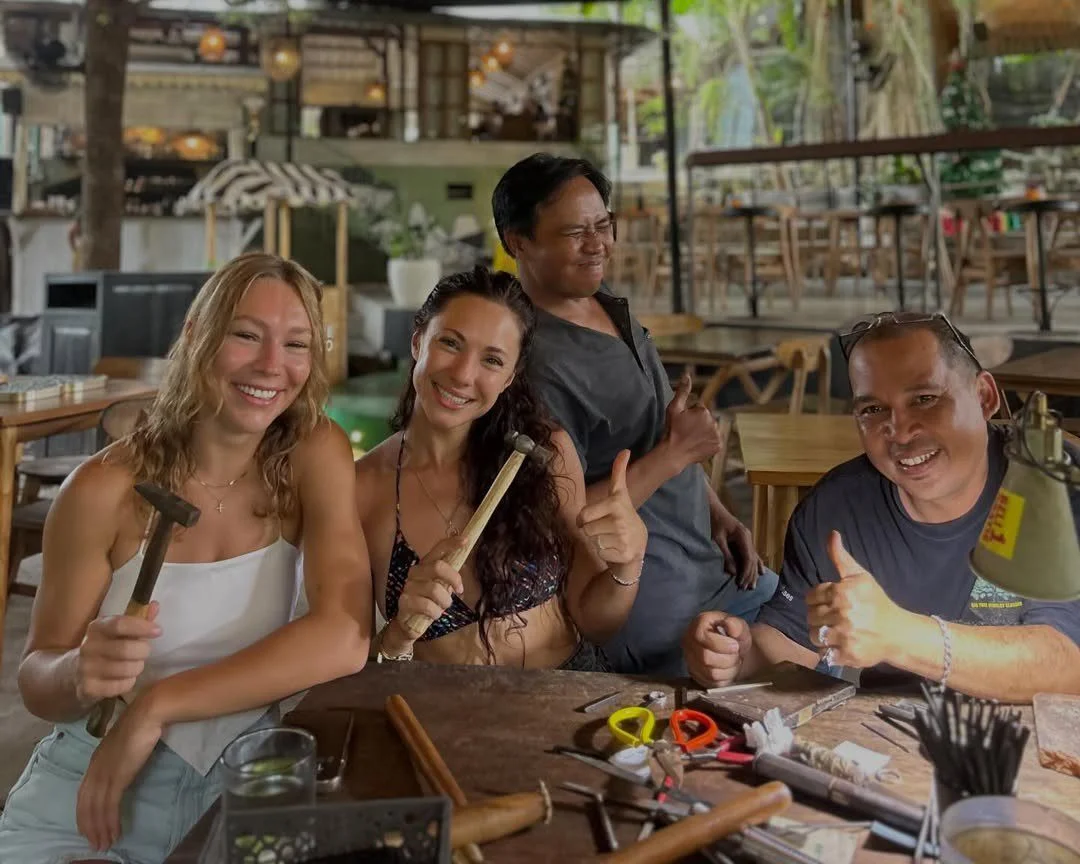
Craft your own silver jewelry under expert guidance in an authentic workshop led by local masters
ReservePrices from verified partners. Availability updates in real time at checkout. Free cancellation policies apply where shown.
Every Uluwatu Silver Class tour side-by-side — duration, what's included, how you redeem.
| Experience | Duration | Rating | Small group | Free cancel. | Price | |
|---|---|---|---|---|---|---|
|
Standard Entry Most popular
Silver Jewelry Crafting Class in Uluwatu
|
2 hr | ★ 4.9 | ✓ | ✓ | €38 | Book → |
|
Standard Entry
Uluwatu Silver & Brass Jewelry Making Workshop
|
2 hr | ★ 4.9 | ✓ | ✓ | €32 | Book → |
|
Standard Entry
Silversmith Workshop with Balinese Artisans in Uluwatu
|
2 hr | ★ 5.0 | ✓ | ✓ | €32 | Book → |
All prices from verified partners. Availability and exact terms confirmed at checkout.
They complement each other; most visitors who do both find the uluwatu silver class tours better for boutique convenience, while Celuk offers superior historical immersion. Choosing between these silver smithing options depends on whether you prefer a secluded coastal workshop or a deep dive into Indonesia's heritage of precious metal craftsmanship.
| Feature | Top pick Uluwatu Silver Class | Celuk Silver Village |
|---|---|---|
Setting |
Coastal boutique studio | Traditional artisan village |
Primary Focus |
Modern personal jewelry design | Heritage technique preservation |
Cultural Depth |
Focused contemporary practice | Deep historical lineage |
Atmosphere |
Quiet and intimate | Busy and collaborative |
Accessibility |
Direct access in Uluwatu | Requires travel to Gianyar |
Vibe |
Relaxed creative session | Commercial artisan hub |
| See tickets → |
Verdict: Select the uluwatu silver class tour for a tailored, tranquil session, or opt for Celuk if you seek broad exposure to classic Balinese jewelry traditions and uluwatu silver class tickets are not your primary priority.
Choose your ticket, select your date, and reserve in under two minutes. Secure checkout handled by our verified partner.
Instant confirmation by email, with a mobile voucher you can save offline. No printing, no queuing at a collection desk.
Arrive at the entrance, show your voucher on your phone, and walk in. Most tickets include priority or skip-the-line access.
Practical details for Uluwatu Silver Class tickets straight from our verified partners — hours, access, rules, and how to get there.
Jalan Toya Ning II, Ungasan
Look for the silver workshop signage
Open in Google MapsThe most convenient way to reach the uluwatu silver class studio.
Casual attire is recommended for this uluwatu silver class. Closed-toe shoes are advised for safety when handling workshop tools.
Secure storage for personal belongings is available during your uluwatu silver class. Please keep large bags to a minimum to ensure comfort in the studio space.
Photography is encouraged throughout your uluwatu silver class session. Feel free to document the crafting process and your finished jewelry.
The studio is not wheelchair accessible due to workshop layouts. Guests should be able to sit for 1–3 hours and have basic manual dexterity for jewelry crafting.
Mobile phones are permitted for capturing your uluwatu silver class progress. Please ensure your device is kept away from your immediate workstation during soldering.
Families are welcome at this uluwatu silver class, though children should be supervised by adults. The hands-on nature of jewelry making is ideal for older children and teens.
Mineral water is provided as part of your uluwatu silver class ticket. Additional snacks or meals can be purchased at nearby cafes in Ungasan.
Pets are not permitted inside the workshop area for safety reasons. Service animals may be accommodated with advance notice for your uluwatu silver class.
Each participant creates one unique piece from up to 5 grams of silver. Additional weight or gemstones incur extra costs payable on-site.
Best time to go, insider tips, nearby landmarks, and the cancellation fine print — flip through to skim what matters to you.
How crowds, weather, and events shift across the year.
August offers sunny weather perfect for visiting after beach time. The uluwatu silver class is air-conditioned, providing a cool escape from the midday sun.
Small details that turn a good visit into a great one.
Reserve your uluwatu silver class spot online to ensure availability during peak seasons. This helps secure your preferred time slot for the 1–3 hour session.
Non-bookable sights within a short walk — free to visit, easy to pair.
Famous cliffside temple with dramatic sunset views.
Flexible, no hidden fees.
Cancellations must be requested at least 24 hours in advance to qualify for a refund. Workshop fees of 600,000 IDR are non-refundable for no-shows or same-day cancellations.
Hand-picked options within walking distance — pick a district for vibe, or a specific hotel for convenience.
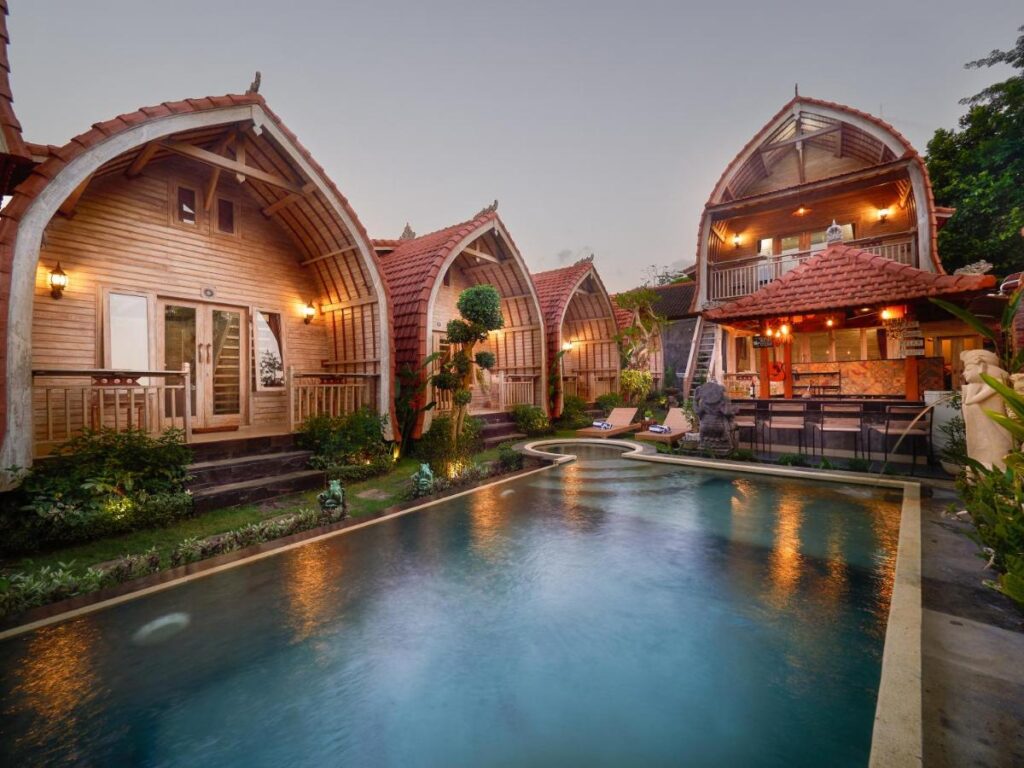
Upscale villas located close to the silver class studio.
Bali's silver-smithing tradition traces back six centuries to the royal courts of Majapahit, where metalworkers hammered temple offerings and ceremonial regalia under strict guild oversight.
The craft migrated southward with Hindu communities fleeing Java's Islamic expansion, settling in Celuk, Kamasan, and scattered villages along the Bukit Peninsula. By the twentieth century, Celuk had become synonymous with ornate filigree destined for export markets, while smaller workshops in Ungasan and Jimbaran preserved older techniques — granulation, repoussé, lost-wax casting — taught master to apprentice in open-air studios cooled by ceiling fans and monsoon breezes.
The Uluwatu Silver Class occupies a converted family compound on Jalan Toya Ning II, a narrow lane flanked by frangipani and bougainvillea two kilometers inland from the clifftop temple. The workshop's founder, a third-generation silversmith trained in Celuk's guild system, opened the studio in 2019 to teach visitors the fundamentals of jewelry construction without the pressure of gallery sales. Each session accommodates six participants maximum, ensuring individual attention at benches equipped with jeweler's saws, mandrels, hammers, and acetylene torches. The 600,000 IDR fee includes materials — recycled silver sheet, wire, and findings — plus a polishing cloth and storage pouch for the finished piece.
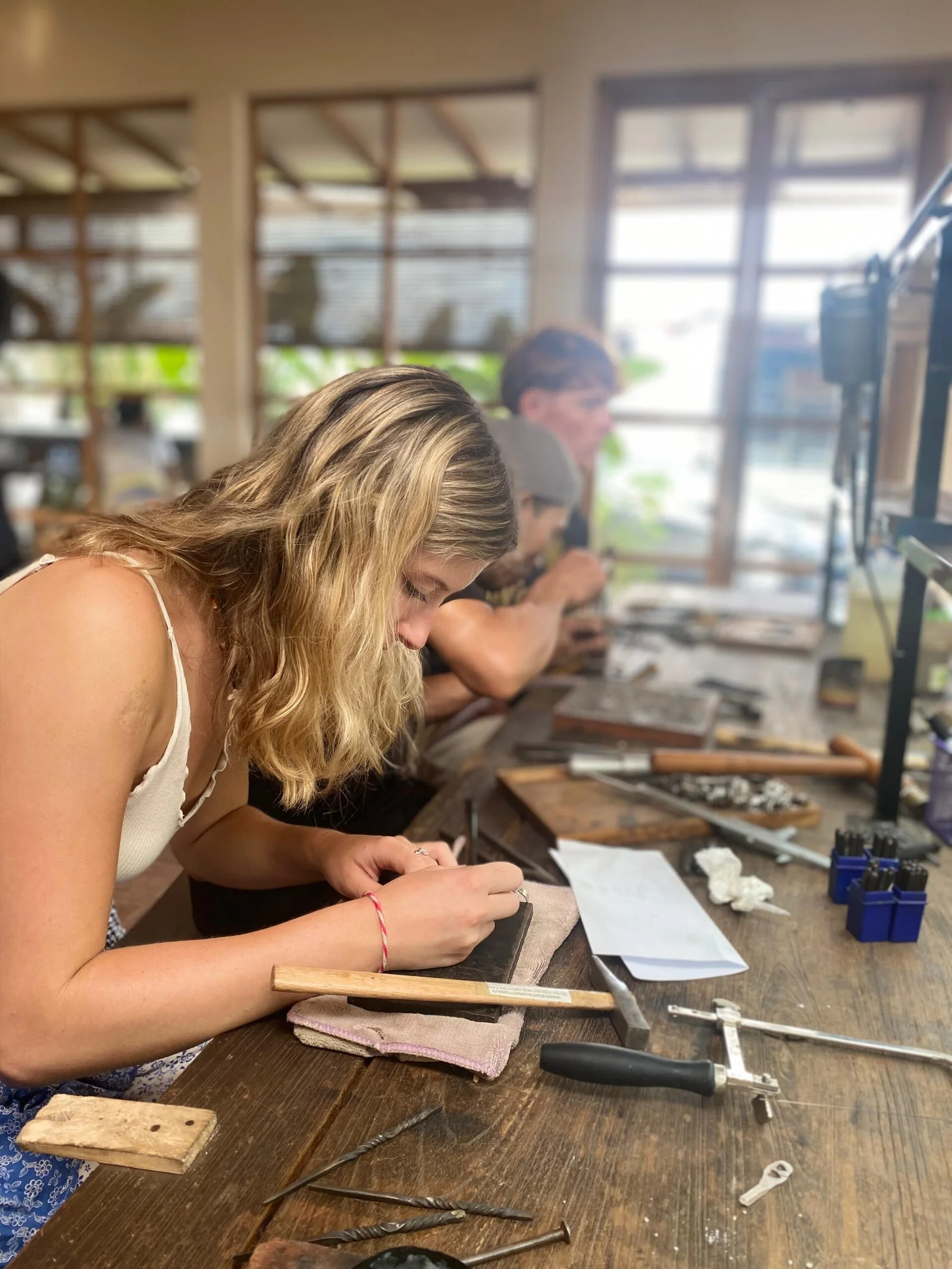
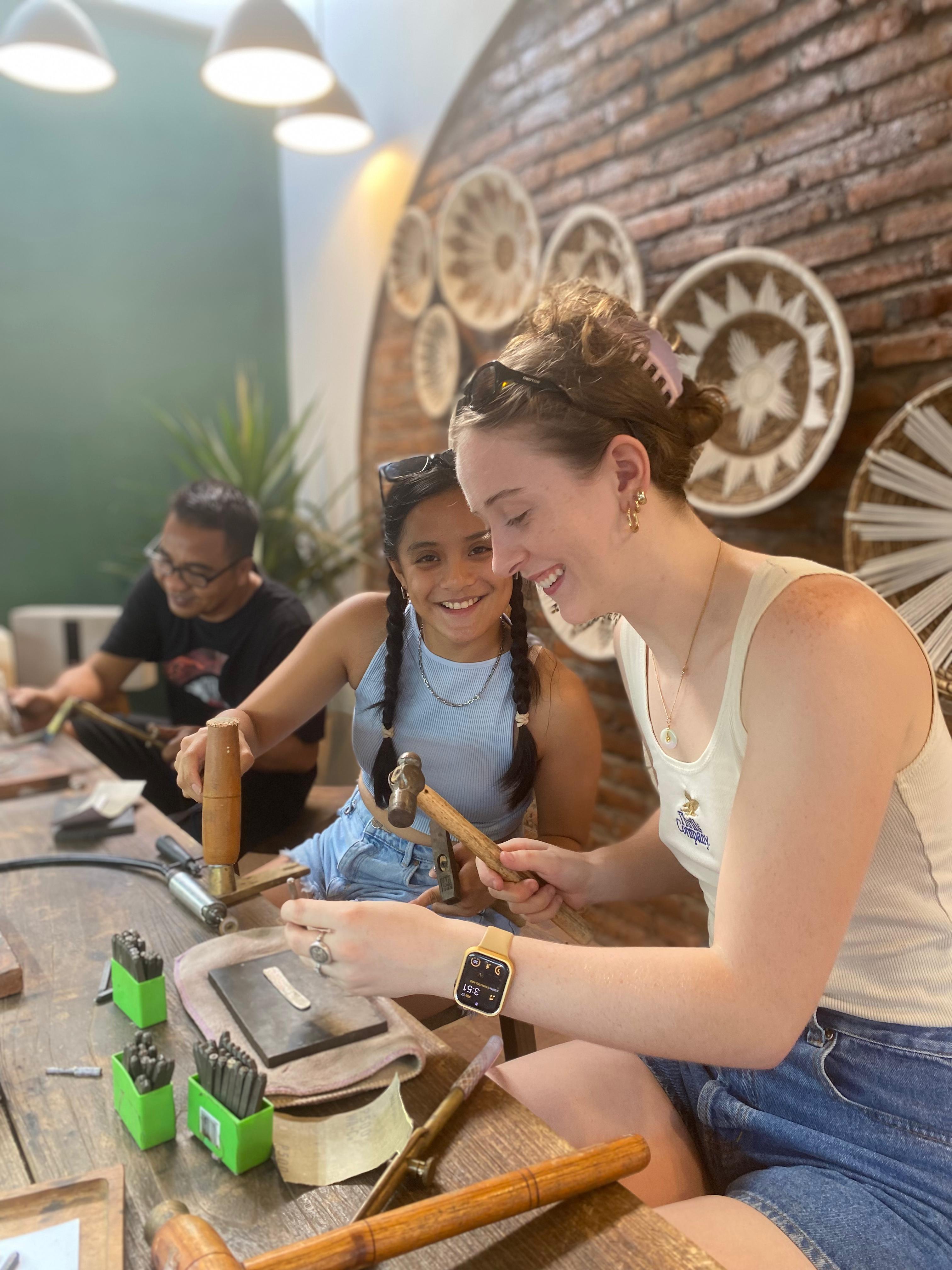
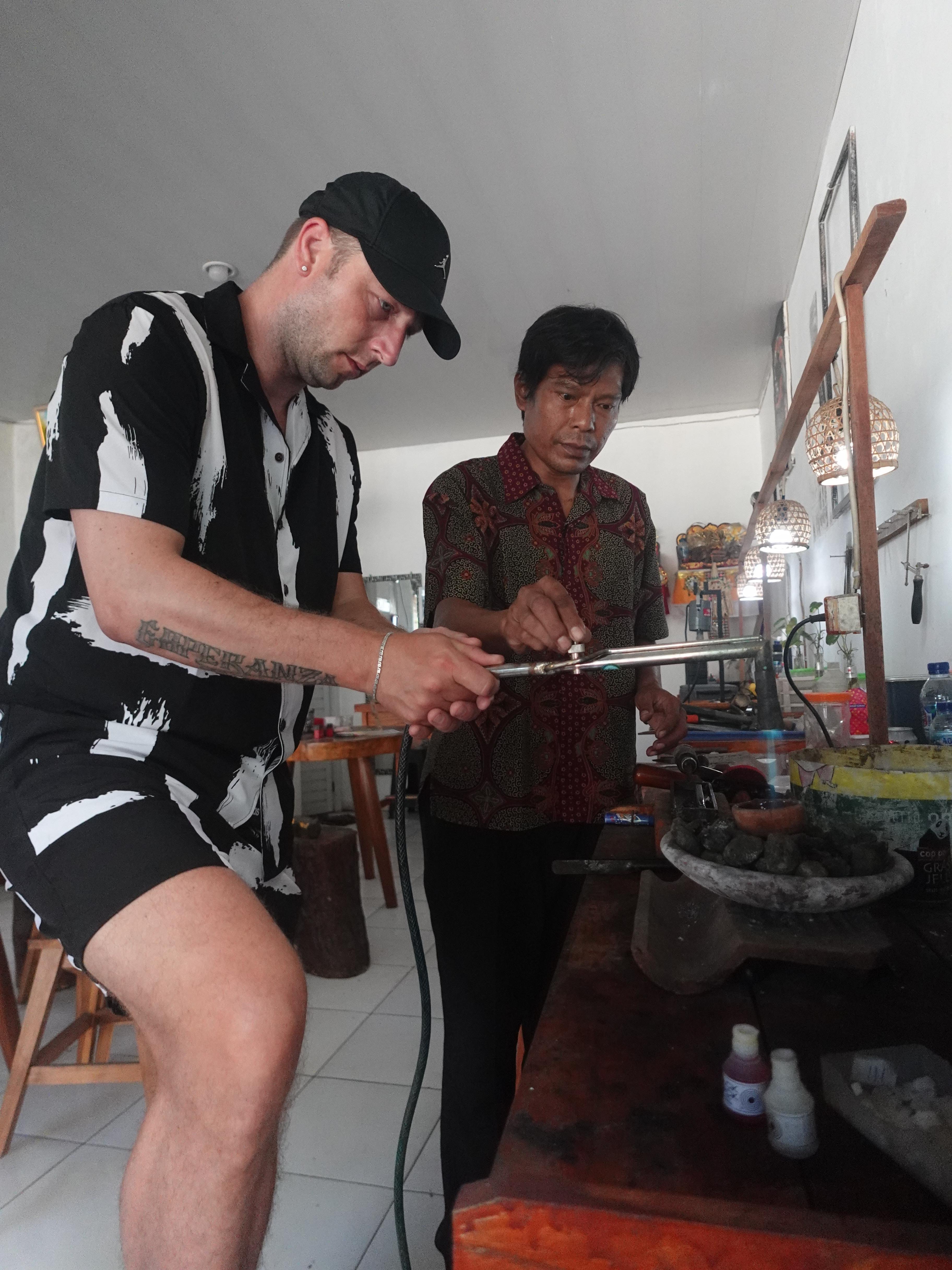
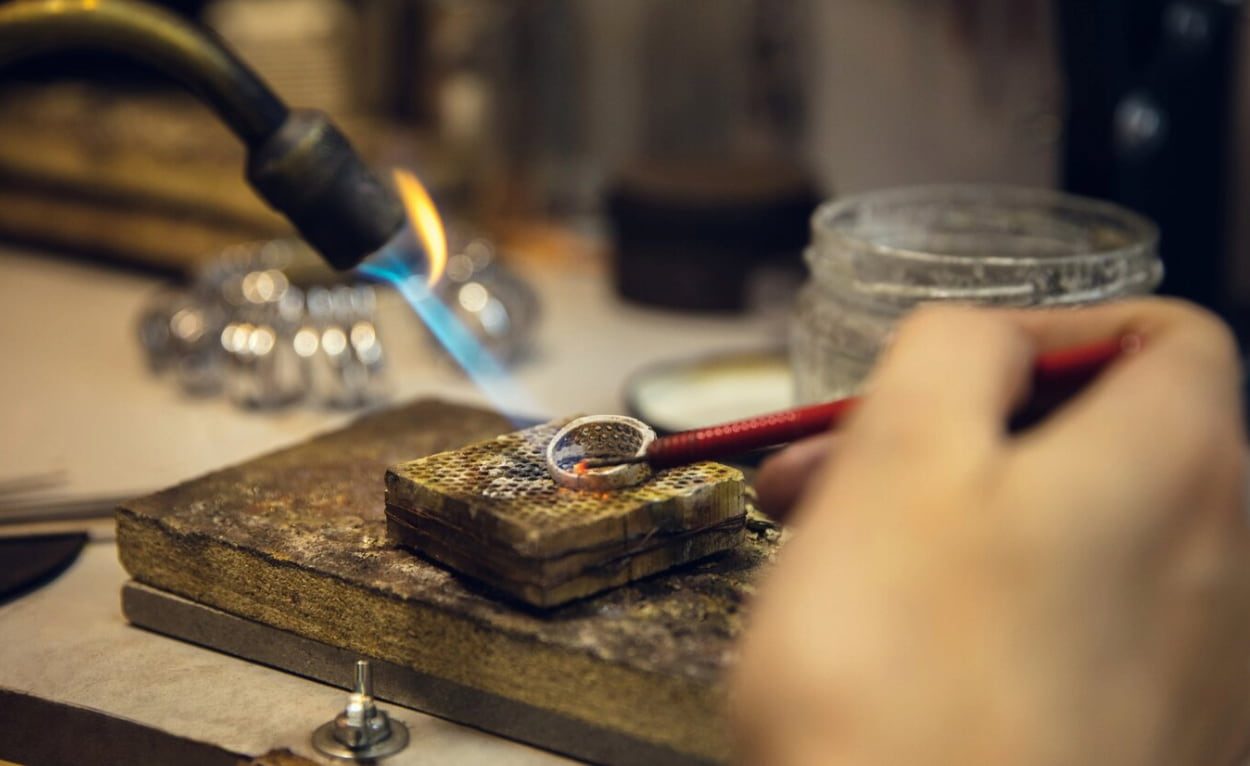
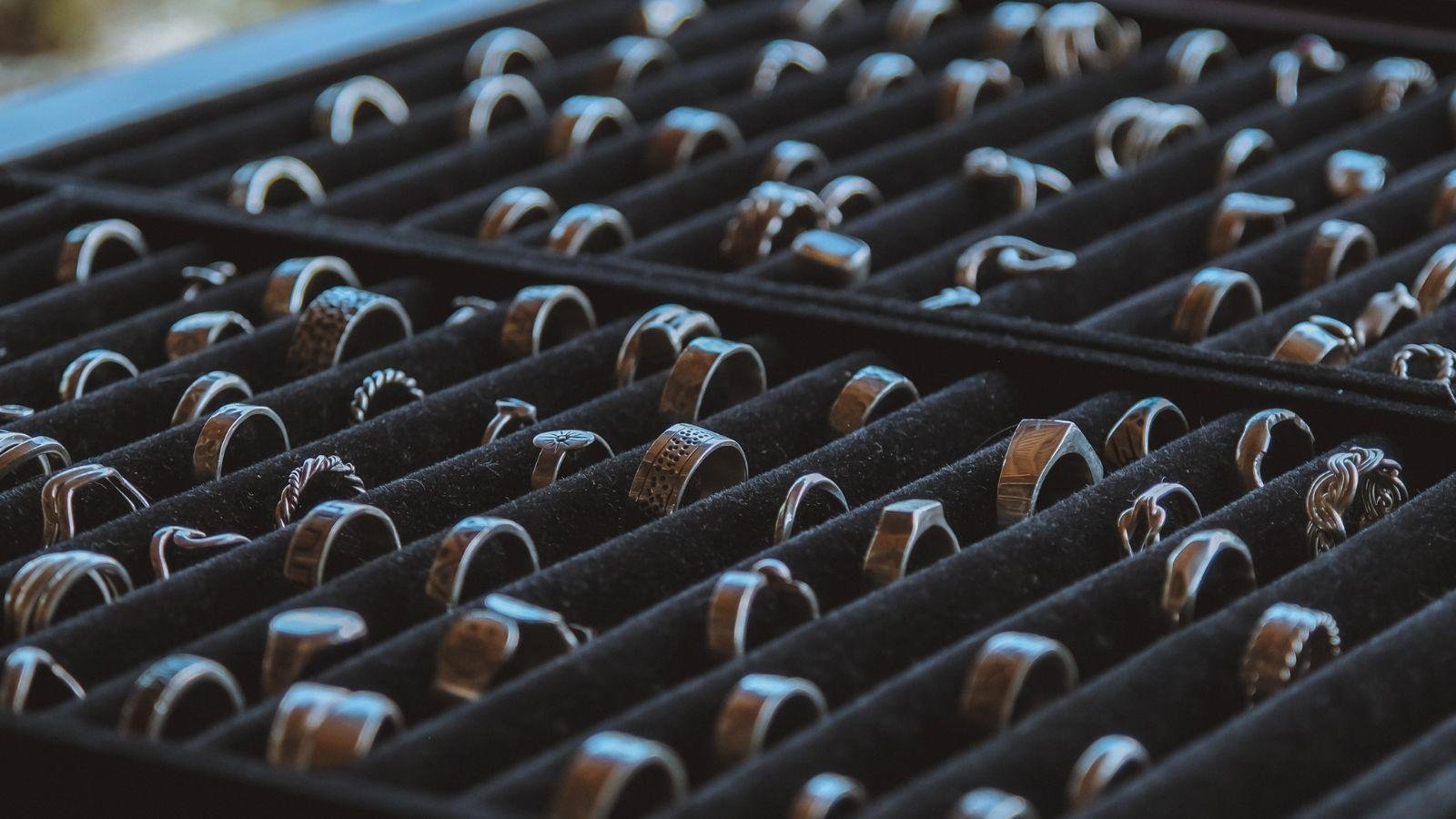
Uluwatu silver class tours introduce four core techniques within the first hour: sawing, filing, soldering, and texturing. Participants sketch a simple design — typically a ring, pendant, or cuff — then transfer the outline onto a silver blank with a scribe. The sawing demands patience; the blade, finer than dental floss, snaps under uneven pressure. Filing smooths the edges, raising a fine silver dust that collects in grooved trays beneath each bench. Soldering, the most technically demanding step, requires a steady hand and precise torch angle to fuse jump rings or bezel settings without melting the base metal. Texture is applied last — stamps, chasing tools, or a planishing hammer — before the piece is pickled in citric acid, rinsed, and buffed to a mirror finish.
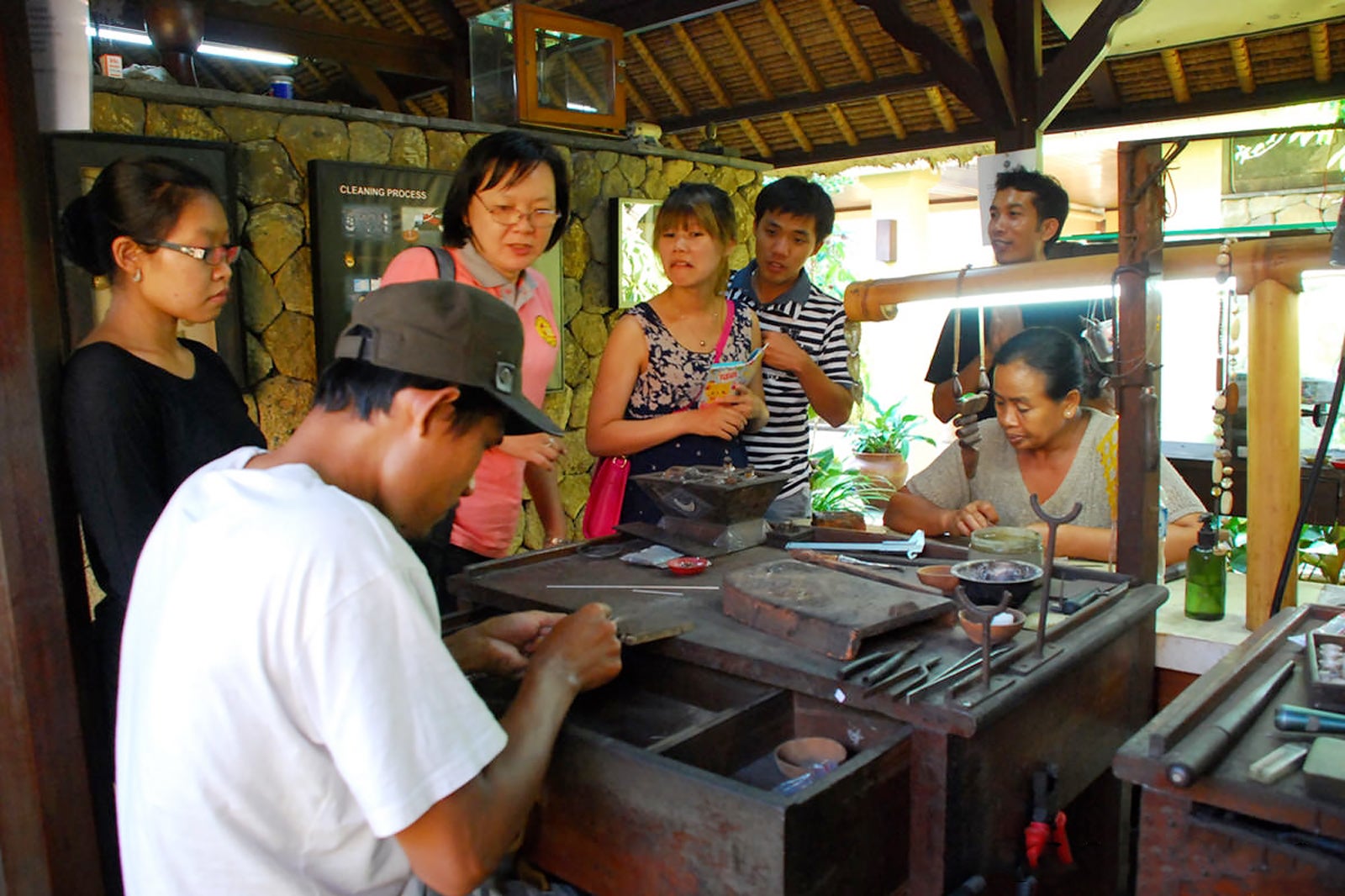
Bali silver class workshops in Ubud and Canggu tend toward production-line efficiency, with pre-cut components and limited tool access. The Ungasan model prioritizes process over output, encouraging mistakes as learning opportunities. Instructors circulate between benches, demonstrating torch control or correcting saw angles, but refrain from completing steps on behalf of students. The workshop operates daily from 09:00 to 21:00, with sessions beginning on the hour and lasting one to three hours depending on design complexity. The studio's location, a ten-minute drive from Uluwatu Temple, positions it as an afternoon counterpoint to the peninsula's coastal attractions — a chance to carry home not a souvenir, but a skill.

"The saw blade, finer than dental floss, snaps under uneven pressure."
A step-by-step walkthrough of Uluwatu Silver Class tickets — what you'll see, how long each stage takes, and the details that matter.
You arrive mid-morning, parking beneath a corrugated awning strung with wind chimes that ring in the onshore breeze. The studio sits behind a wooden gate, its courtyard shaded by a banyan whose aerial roots frame the entrance.
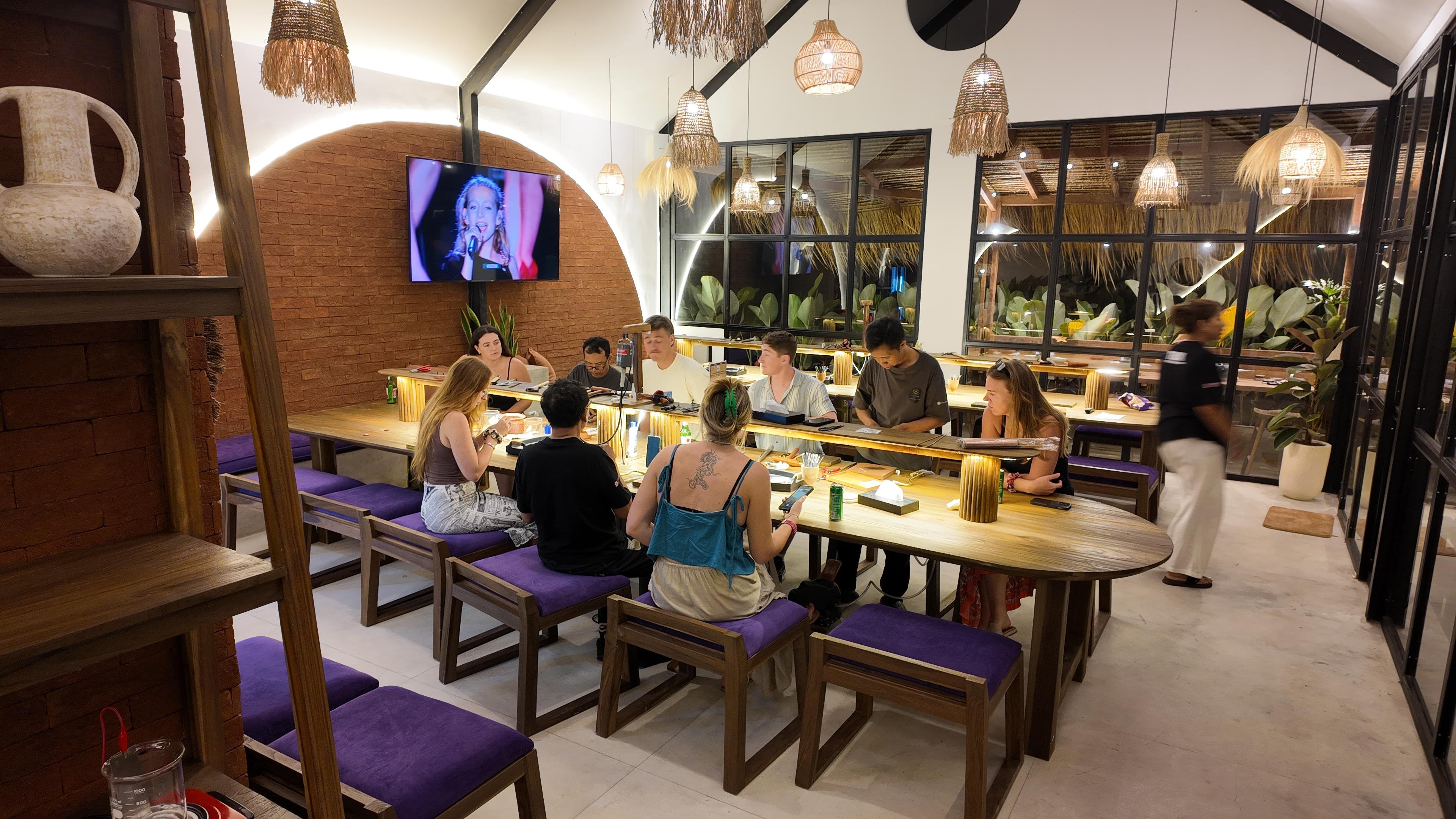
Inside, six workbenches line a whitewashed room open to the garden, each station fitted with a jeweler's saw, torches clamped to metal poles, and trays of tools arranged by function. Your instructor, a woman in her forties wearing a leather apron, greets you with cooled jasmine tea and a materials tray: three silver blanks, coils of wire, and a selection of stamps.
You sketch a ring design on graph paper, measuring your finger with a steel mandrel, then transfer the outline onto the silver sheet with a scribe. The saw, mounted in a wooden frame, requires a vertical stroke and light pressure; your first attempt snaps the blade. The instructor replaces it without comment, adjusting your wrist angle. Twenty minutes later, the ring blank separates from the sheet, its edges rough with saw marks. Filing takes another fifteen minutes, the rasp's bite smoothing the metal into a perfect circle. Soldering comes next. You flux the seam, position the ring on a charcoal block, and apply the torch's blue cone until the solder flows like water. The instructor nods. You quench the ring in a copper bowl, the metal hissing as it cools, then pickle it in acid to remove oxidation. The final step is texturing: you select a geometric stamp and hammer it along the band's exterior, each strike leaving a crisp impression. After buffing, the ring gleams against your palm, warm from the polishing wheel, its weight heavier than expected.
The workshop is open daily from 09:00–21:00. This flexibility allows you to fit the uluwatu silver class into any schedule.
Yes, the uluwatu silver class is perfect for all levels. Artisans provide step-by-step guidance for every participant.
The 600,000 IDR workshop fee includes materials, professional guidance, and mineral water for your uluwatu silver class.
Private sessions can be arranged; contact the operator to customize your uluwatu silver class experience.
The crafting session typically takes 1–3 hours. We recommend arriving by 18:00 to complete your uluwatu silver class design.
Yes, all tools and 5 grams of silver are included in your uluwatu silver class ticket. Additional weight is charged separately.
The best arrival window is 09:00–18:00. Arriving early ensures a relaxed pace for your uluwatu silver class.
Families are welcome to join the uluwatu silver class. It is an engaging activity for creative children.
No, the uluwatu silver class provides all necessary professional tools. Just bring your creativity to the Uluwatu studio.