
English| EUR
Suggested for you
More currencies
Choose a language
Bali's silver carries a pricing advantage travelers notice immediately—jewelry that commands premium rates in Sydney or Los Angeles sells for a fraction of that figure in Uluwatu's artisan quarters. The question is not whether silver is affordable here, but what drives the spread and how to verify you're buying genuine sterling rather than plated brass.
Quick answer
Is silver cheap in Bali? Yes. Sterling silver jewelry in Uluwatu typically costs 30-60% less than equivalent pieces in Western markets, with workshop-direct pricing starting around 15,000-25,000 IDR per gram for simple designs and 40,000-80,000 IDR per gram for intricate handwork. The advantage comes from local production, lower labor costs, and proximity to regional supply chains. Always verify the 925 hallmark and request a weight-based quote to ensure you're paying for actual silver content rather than inflated artisan markup.
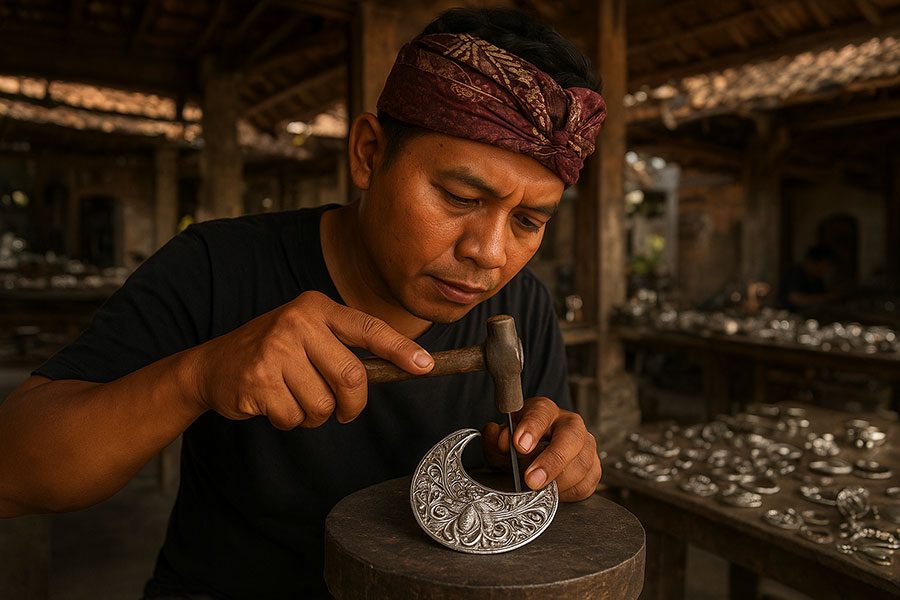
Bali produces roughly 60% of Indonesia's silver jewelry output, and Uluwatu sits within a 20-kilometer radius of three established silversmithing villages where workshops sell directly to visitors. The price difference between Bali silver and imported equivalents is real but often misunderstood—it reflects manufacturing cost, not material purity. A 925 sterling silver ring weighing 8 grams might retail for 320,000 IDR in a Pecatu workshop and 95 AUD in a Melbourne boutique, yet both contain identical silver content. The gap is labor and overhead, not metal quality. Is silver cheap in Bali when measured against global bullion rates? The answer depends on whether you're buying by weight or by design. Simple band rings and chain bracelets sold by gram weight track close to the London spot price plus a modest fabrication fee—typically 15,000-18,000 IDR per gram in mid-2026. Elaborate pieces with granulation, filigree, or stone settings command higher per-gram rates because the labor cost dominates. A 12-gram statement cuff with hand-carved detail might cost 600,000 IDR, pushing the effective rate to 50,000 IDR per gram. That is still cheaper than comparable artisan work abroad, but it is not bargain-bin pricing. Hallmark verification matters. Legitimate workshops stamp 925 on every piece and allow you to test with a jeweler's loupe or acid kit. Counterfeits exist—silver-plated brass sold as solid sterling—and they cluster in high-traffic tourist zones rather than workshop showrooms. Buy from producers who maintain a furnace and polishing station on-site. Negotiation is expected but constrained by material cost; you can reduce the artisan markup by 10-20% through respectful bargaining, but attempting to halve the quoted price signals you are buying in the wrong venue. Uluwatu's proximity to Celuk, the island's historic silver hub located 28 kilometers north, means many local galleries source stock directly from family-run forges. If a piece interests you, ask whether it was made in-house or imported from Celuk. Both are legitimate, but in-house production often allows custom sizing or design tweaks within 48 hours. The reputation of Balinese silver rests on craft tradition and transparent pricing—qualities that endure when you verify the metal, understand the labor, and buy where the work happens.
“A 925 sterling silver ring weighing 8 grams might retail for 320,000 IDR in a Pecatu workshop and 95 AUD in a Melbourne boutique, yet both contain identical silver content.”
The cost of entry to the Uluwatu temple area is standardized to maintain conservation efforts. This fee provides access to the grounds and includes the necessary cultural attire for visitors.
Verdict: A typical adult pays 60,000 IDR, which remains constant regardless of the day or time of visit.
To balance silver research with the region's cultural attractions, coordinate your schedule to align with the peak sunset timeframe. Arriving during the best arrival window of 16:30–18:00 ensures you have sufficient time for both craft-related activities and securing access to the area's primary performance.
Dry, 27–30°C
Ideal for focused research without peak visitor traffic.
Warm and generally dry, 27–31°C
These shoulder months offer favorable conditions for movement between workshops and cultural sites.
Sunset conditions, 26–28°C
This is the mandatory arrival window for those coordinating silver activities with the sunset performance.
Verdict: The optimal approach is to plan your silver research during weekday mornings in April or October, ensuring you reach the area by 16:30–18:00 for the evening performance window.
The site remains open daily to accommodate visitors planning their trips. These operating hours ensure consistent access throughout the week.
The Uluwatu area is situated in Pecatu, South Kuta, and is accessible primarily via private vehicle. Public transportation is not available, making car or taxi rentals the standard approach for visitors.
Direct transfer to Pecatu via Jl. Uluwatu
Private hire via Jl. Raya Uluwatu
Within Pecatu village to site entrance
Plan your travel to ensure arrival between 16:30–18:00 to secure your entry for the Kecak Fire Dance. Parking is available on-site, though traffic on Jl. Uluwatu can be heavy during peak afternoon hours.
Navigating the silver market in Uluwatu requires distinguishing between handcrafted artistry and mass-manufactured components.
Look for the 925 stamp on the interior or clasp, which indicates the piece is sterling silver. Be cautious of items lacking this mark, as they may be base metals with thin silver plating.
Authentic handcrafted silver has a consistent weight and cool tactile feel. If an item feels surprisingly light for its size, it is likely hollow-cast or made from synthetic materials.
Bring a small magnet to check your pieces, as genuine silver is non-magnetic. If the item sticks to the magnet, it contains iron or other base metals rather than pure silver.
Inspect the joints and connecting points for discoloration or rough, uneven soldering. Artisan-made silver should feature clean, precise connections that blend seamlessly into the design.
High-quality silver will naturally tarnish over time due to oxidation when exposed to air. If a piece appears bright white and shows no signs of aging in a shop, it may be rhodium-plated to hide inferior metal quality.
Everything you need to know about is silver cheap in bali
Generally, is silver cheap in Bali compared to Western markets due to lower labor and material costs. However, prices fluctuate based on design complexity and artisan skill levels rather than just weight. Local workshops often provide better value than high-end retail stores in tourist hubs.
While many ask is silver cheap in Bali, prices vary by region because Ubud is traditionally the island's hub for silversmithing. Uluwatu boutiques often cater to different demographics, so you may find unique contemporary designs that command higher premiums than traditional Balinese patterns.
When evaluating if silver cheap in Bali is a realistic expectation, always check for quality hallmarks such as 925 stamps. Ensure the gemstone settings are secure and avoid shops that inflate prices based on aggressive marketing. Trusted artisans are happy to explain their process and material sourcing.
Participating in a jewelry class is a popular activity, especially for those interested in traditional craftsmanship beyond asking is silver cheap in Bali. These sessions allow you to create custom pieces while learning about the regional history of precious metals. You gain a personal souvenir that represents the authentic local culture.
The best time to visit the area is between 16:30–18:00 to maximize your afternoon before the sunset performances. This window helps you avoid the heat of midday while allowing ample time to explore the surroundings. Traffic can be heavy, so plan your arrival accordingly.
The entrance fee is 60,000 IDR per person, which is a conservation fee required for all visitors. This charge includes the mandatory sarong and sash usage for those entering the temple grounds. Keep your receipt handy during your visit.
You can reach the Pecatu area in South Kuta by private driver, taxi, or scooter. As the location is in the Badung Regency, ensure your transport provider is aware of the specific temple or workshop destination. Allow extra travel time if you are coming from northern regions.